Concrete Pool Decks in Pico Rivera CA - a deck built to protect your coping
Cracked or tired deck around your pool? We pour a new slab with a flexible joint at the coping and a no-slip sealer on top.
Start planning your new pool deck
Call (562) 271-1038 or send the form now, since a pool deck needs a pour, a cure and a later caulking visit before it's done.
What goes into a new concrete pool deck in Pico Rivera?
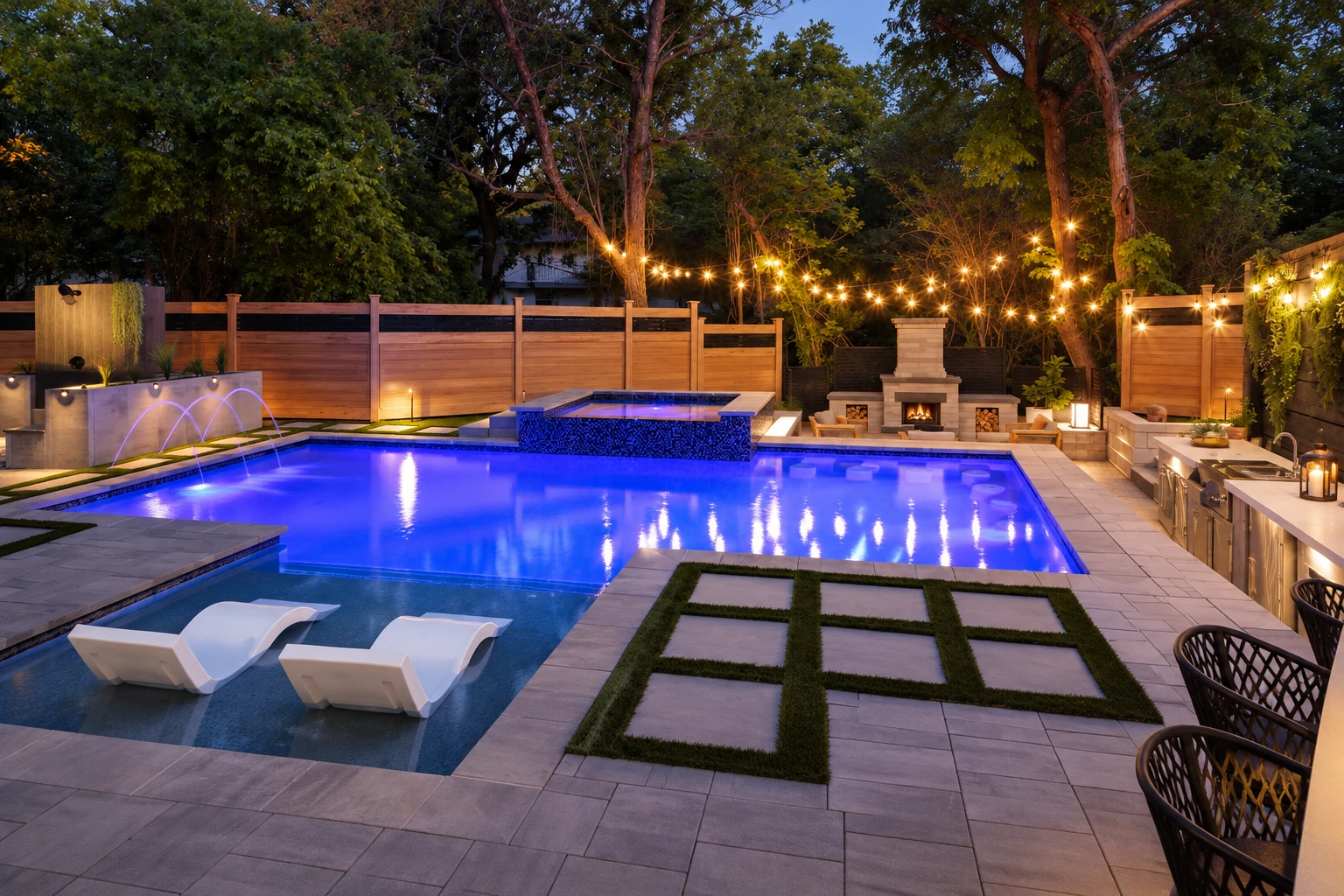
A concrete pool deck is a poured slab around your pool that meets the coping, the cap along the pool's edge, at a sealed joint, and at Standard Pico Rivera Concrete we build them for homes in Pico Rivera and the cities around it, from Downey to Whittier.
Most calls start with an old deck that's cracked along the edge, sunk in spots or gone chalky, and the question is what a new one takes. The price turns on the deck's size, how much old concrete has to come out, how the edge meets your coping and the finish and sealer you pick, while the schedule turns on the tear-out, the pour and a planned wait while the slab cures, or hardens and settles in, before the coping joint gets caulked. Your written estimate lists each of those pieces, so you can see what you're paying for.
Why Pico Rivera homeowners call Standard Pico Rivera Concrete for pool decks
The owner measures and runs it
I measure and write the estimate myself, then run our own small crew on site through the job. The person who answered your questions is the one watching your coping joint go in.
Licensed in California, fully insured
California lets an unlicensed worker take only jobs under $1,000 that need no permit, and only when they employ no one on it. A pool deck usually runs well past that. We're licensed and fully insured.
Full time in concrete since 2017
I started with side jobs for neighbors in Pico Rivera and made it a full-time business in 2017. That's nine years of learning what goes wrong under a slab and how to head it off.
On a pool deck, the parts that matter most are hidden once it's poured, so get in touch and I'll show you how we'd build yours.
How we build a concrete pool deck
We break out the old deck and dig down to the subgrade, the ground the new slab will sit on, then pack a firm base, because that hidden layer is the first thing people want to cut from a budget and the last place I'll save money. We set forms, lay rebar, the steel that holds the slab together, and pour early in the day so the top doesn't bake in the midday heat and turn weak and dusty later. After a broom finish, a light dragged texture that gives bare feet something to hold, we cut control joints, shallow grooves that tell the concrete where to crack so it doesn't pick its own spot. At the coping we leave a gap and fill it with a flexible sealant, not sand, so the deck can move without cracking the coping, and we caulk that joint as a later step once the deck has cured. The last coat is a no-slip sealer, and the sealer maker says water-based or solvent-based can both work depending on the look you want, as long as the label clearly says no-slip. The area's rules on volatile organic compounds, or VOCs, are worth checking before settling on one.
A pool deck rarely stands alone. Where your back door or patio sits higher than the deck, we can build concrete steps in the same job and match the finish, and if a pool house or equipment pad is in the plan, slab foundation building is the work that sets the floor under it.
Broom finish with no-slip sealer
This suits most families, because the texture and the no-slip sealer make a plain, practical surface that's easy to keep up. It's the finish I'd pick for a deck that sees kids running laps all summer.
Acrylic sealer for richer color
An acrylic sealer gives the deck a glossier, wetter look that makes the color pop, so it suits colored concrete you want to show off. Get it in the no-slip version, since that matters around a pool either way.
How can you tell your pool deck needs replacing?
Cracks beside the coping
You see cracks or chips in the coping or the deck right next to it. Usually the deck has been pushing on the edge with no room to move, and the repair grows every season.
Caulk pulled loose
The joint between the deck and the coping is cracked, gapped or packed with sand. Water and grit get in, and what's a small fix now can turn into a coping repair later.
A chalky, faded surface
The deck has lost its color and feels rough or powdery. The sealer has usually worn away, and bare concrete takes more wear from water and sun until the top starts breaking down.
Sunken or tipped sections
Part of the deck has dropped or tilts away from the rest. That usually means the base under it settled, and a slab edge that sticks up becomes a trip spot that keeps getting worse.
What happens after you call about a pool deck?
Set up an on-site visit
Call or send the form and we'll set up a visit. I come out, measure, look at your coping and send a written estimate that lists each part of the job.
We permit, prep and pour
Once you say yes, we handle any permit through Pico Rivera's Building Division, open Monday through Thursday, 7:30 a.m. to 5:00 p.m., then prep, form, pour and finish the deck.
Caulk, seal and walk through
After the cure, we come back to caulk the coping joint and put down the no-slip sealer. Then I walk the finished deck with you before we pack up.
Pool deck questions, answered
These are the questions I hear most about pool decks around Pico Rivera. If yours isn't here, call (562) 271-1038 and I'll talk it through with you.
How much does a concrete pool deck cost in the Los Angeles area?
A concrete pool deck in the Los Angeles area usually costs about $6 to $13 per square foot. That's a typical figure for the area, not our price, and your written estimate shows where your deck falls once I've measured it and seen the coping.
Why does the joint between a pool deck and the coping matter?
That joint keeps the deck from damaging the coping. One coping maker's guide says a deck needs a gap and flexible sealant next to the coping, because without them deck movement can crack or flake the coping and the bond beam, the concrete band along the top of the pool wall. Ask any installer what goes in that gap, since sand doesn't compress and passes the movement straight to the coping.
How long do you wait before caulking a new concrete pool deck?
The same coping maker's guide says to wait at least 30 days after the pour before caulking the joint on a poured concrete deck. That time lets the slab do its first curing and shrinking, so plan on the caulking as a later visit near the end of the job.
How often does a concrete pool deck need to be resealed?
The sealer maker's guide puts resealing anywhere from every three years to every 15 years, depending on foot traffic and the shape the concrete is in. Weather, the last coat and the product used change it too, so budget for sealing as regular upkeep.
How do I know when my pool deck caulk needs replacing?
Look at the joint once a year and repair or replace the caulk when it cracks, pulls away or starts breaking down. Most elastomeric caulks, the stretchy kind used there, last five to ten years, and catching a worn joint early keeps the fix small.
Where do I get building permit forms in Pico Rivera?
The city offers plan check and permit application forms for residential construction on its Building and Safety page, and you submit them with the fees for your scope of work. If your deck needs a permit, we pull it and deal with the office for you, and if we're not sure what your address needs, we check with them before we start.
Get a written estimate for your pool deck
Tell us your address and the deck's rough size in square feet, and have a few photos of your coping ready. We reply within one business day to set up a free, no-obligation visit, and I write the estimate myself.
Concrete pool deck ideas
Work that often goes with a pool deck
Concrete steps construction
If your back door or patio sits above the deck, poured steps give you a solid, matching way down instead of a loose paver or wood stair.
Learn moreSlab foundation building
Planning a pool house, shed or equipment pad near the water? It needs its own slab, and pouring it alongside the deck keeps the levels lined up.
Learn more