Concrete Retaining Walls in Pico Rivera CA - Built to Drain So the Slope Stays Put
A slope crumbling into your yard or an old wall leaning out? We build a concrete wall that holds the soil and lets water drain.
Send us photos of your slope
Photos of the slope and a rough length and height help me come out ready, so call (562) 271-1038 or use the form.
What goes into a concrete retaining wall, and what drives the price?
A concrete retaining wall holds back soil on a sloped or cut lot in Pico Rivera, so your yard, driveway or patio stays put instead of creeping downhill. One common design is an L- or T-shaped wall reinforced with rebar, steel bars set inside to hold the concrete together, where the dirt resting on its footing works as a counterweight that keeps the wall from tipping.
Most people call because a slope is sliding, an old wall is leaning, or they want flat ground where the yard drops off. The price moves with the wall's height and length, how much dirt has to come out, whether an old wall has to go first, how easy the spot is to reach and how much drainage it needs behind it. The schedule turns on any permit review, the digging and curing, which is the wait while the concrete hardens enough to take the weight of the soil behind it. My written estimate lists each of those parts so you can see where the money goes.
Why homeowners around Pico Rivera call us about retaining walls
The owner measures and runs it
I come out to look at the slope, measure and write the estimate, then run our own small crew on site. The person who planned your drain is there when it goes in.
Licensed and fully insured for walls
State law lets an unlicensed worker take a job only up to $1,000, when it needs no permit and they hire no one, and a concrete wall almost always costs more. We're licensed and fully insured.
Pouring concrete full time since 2017
I started with side jobs for neighbors in Pico Rivera, learning next to older finishers, and made it a full-time business in 2017. I'd rather explain your wall three times than have you guess.
On a retaining wall, the part that matters most ends up buried behind it, so ask me about the drain first when you get in touch.
How we build concrete retaining walls
I start by looking at how much room you have behind the wall line, because that decides which type of wall fits, and we pick it together. Then we dig out the footing, pack the ground it sits on, set the rebar, form the wall and pour. Most of our attention goes behind the wall, into clean gravel against its back, filter fabric that keeps soil from clogging the gravel, and a perforated drain pipe wrapped in fabric along the base, because water that can't get out builds pressure and poor drainage is what takes walls down. If you're comparing bids, look for those three parts by name. When the budget gets tight, I'd rather you skip a fancy face than cut the drain, since nobody sees the gravel on day one and it's the part holding the wall up.
A wall usually changes the ground around it, so the work often doesn't stop there. If the wall levels out a spot for a garage, shed or room addition, we can pour the slab with our concrete floor installation work. Around a sloped pool yard, we build concrete pool decks and plan the deck's runoff together with the wall's drain.
Plain poured wall
This suits most yards where the job is simply holding dirt, because a straight, plain face is the simplest to form. That keeps more of your budget in the footing, the steel and the drain.
Replacing a failing wall
For an old wall that's leaning or cracked, we tear it out first and look at why it went, which you usually only see once it's open. That tells us what the new drain has to handle.
Curved or decorative face
For a wall that's part of how the yard looks, we can curve it or give it a stamped or colored face. It costs more, so I'd only spend there once the drain is covered.
How do you know a retaining wall needs work?
Wall leaning at the top
The top tips out past the bottom, even a little. That usually means soil and water are pushing harder than the wall can take, and a lean tends to get worse with each wet season.
Wet ground at the base
Soggy soil, mud or stains at the foot of the wall after rain usually mean water is stuck behind it. Left alone, that pressure can crack the wall or wash out its footing.
Cracks that keep growing
A crack that widens or shifts over a season usually means the wall is moving. Catching it early can mean fixing the drainage instead of tearing the whole wall out.
Dirt spilling onto the patio
Soil washing over the wall or onto your patio, driveway or walkway means the slope isn't being held. Waiting lets it undercut the slab below and turns a wall job into a bigger repair.
What happens after you call about a retaining wall?
Set up a site visit
Call (562) 271-1038 or send a message, and we set up a visit. I come out, measure the slope and send a written estimate that lists each part, drain included.
We permit, dig and pour
Once you say yes, we handle any permit, then dig, set steel, form and pour. Pico Rivera's Building Division is open Monday through Thursday, so we plan permit trips around that.
Walk the finished wall together
After the concrete cures, we backfill behind it and clean up. Then we walk the wall with you before we pack up, so you see where the drain lets out.
Retaining wall questions we hear
Here are straight answers to what people around Pico Rivera ask before building a wall. If your slope or lot has a wrinkle these don't cover, call and ask about your own job.
How much does a concrete retaining wall cost in the Los Angeles area?
A poured concrete retaining wall about 3 feet high, with excavation, backfill and reinforcement, usually costs about $49 to $54 per square foot in Los Angeles. That's the going rate in the area, not our quote. Tearing out an old wall, a curved shape, a stamped or multi-colored face, a wall taller than 3 feet or hard digging all push it higher, and your written estimate shows where yours lands.
How do I choose a retaining wall for a narrow yard?
In a narrow yard, a cantilever wall, the L- or T-shaped kind, usually fits best because most of its base can sit on the side holding back the soil. It also gives a slim face that lines up cleanly. A gravity wall needs a big dig behind it, so it's a poor pick when space is tight, and if you do go that way, ask how the drain will stay clear, since those walls take on water pressure when drainage clogs.
What causes a concrete retaining wall to fail?
Poor drainage is by far the most common reason retaining walls perform badly, because water trapped in the soil behind the wall keeps pushing on it. Small problems like a lean or a wet spot can grow into outright failure if nobody deals with them. That's why the drain deserves as much attention in a bid as the concrete.
Who issues the permit for a retaining wall in Pico Rivera?
Inside Pico Rivera, the city's Building Division enforces the building rules for homes, while LA County Public Works issues retaining wall permits in unincorporated county areas. The city's office takes questions by email at buildingdivision@pico-rivera.org, by phone or at its public counter. If your wall needs a permit, we pull it and deal with the office for you, and if we're not sure what your address needs, we check with them before we start.
What should I check before building a retaining wall near my property line in Pico Rivera?
Check where your property line and any public utility easements fall, because the city doesn't allow any part of new construction, walls and footings included, to reach into the public right-of-way along the street. The city also says anything an owner builds in a utility easement that gets in the way of utility work is removed or replaced at the owner's cost. Bring any survey or easement details you have to the estimate, and we'll lay the wall out to stay on your side.
Do weep holes keep water from building up behind a retaining wall?
Weep holes help, but they won't keep water from building up on their own. They let water out through the lower part of the wall, and they often clog from poor backfill, plants, animals or trash, so they only give backup relief. The gravel and pipe behind the wall do the real work.
Get a written estimate for your wall
Tell us where the slope is, how long and tall the wall should be, and any property line or easement details you know. We reply within one business day to set up a free visit at your property, with no obligation.
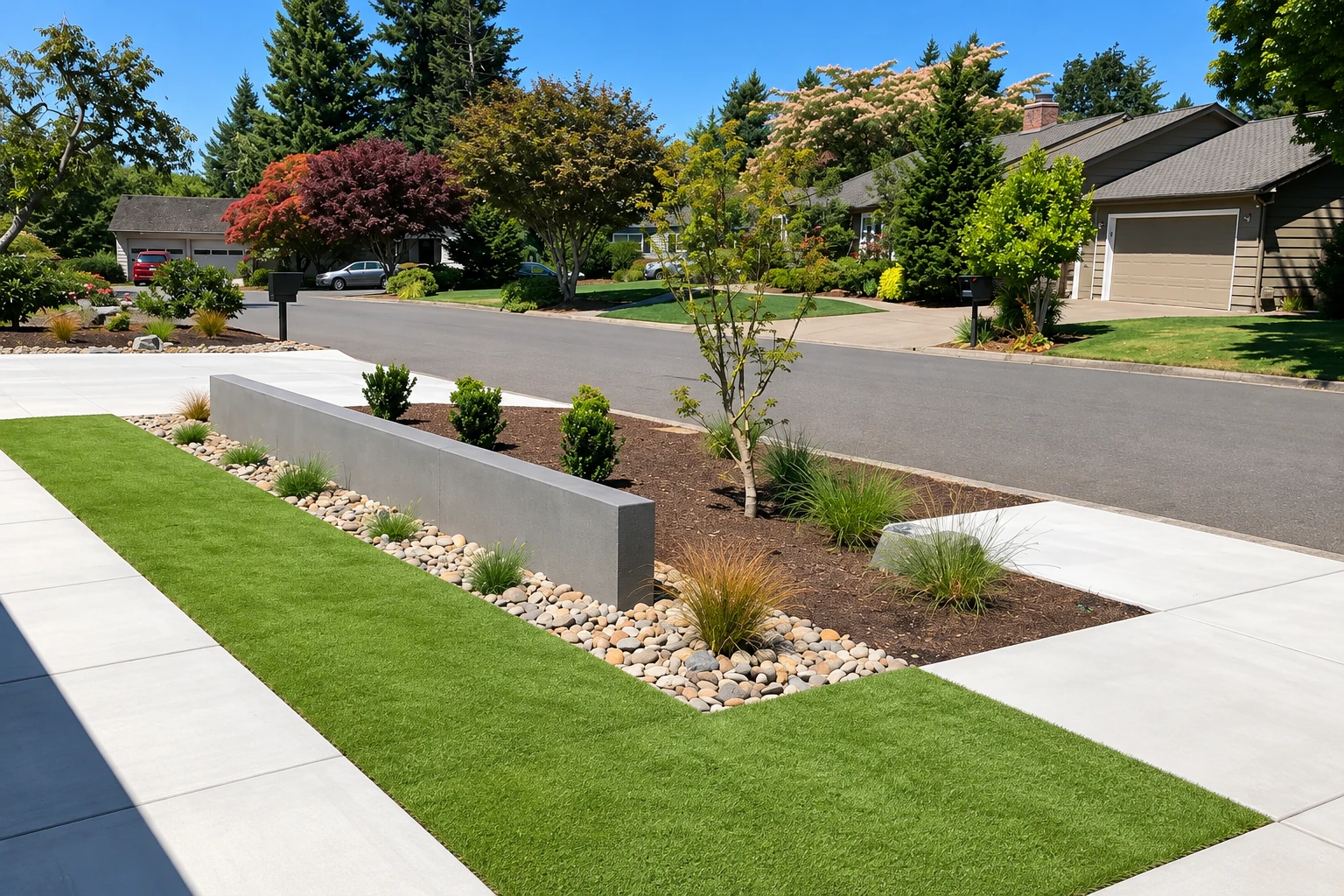
Concrete retaining walls up close
Other work that goes with a wall
Concrete floor installation
If you're building on the level ground a new wall creates, a well-prepped concrete floor gives that room, shed or shop a solid, dry base.
Learn moreConcrete pool decks
Pool yards on a slope often need both a wall and a deck, and planning them together helps keep runoff from one draining toward the other.
Learn more